Popular Home Loans: A Guide to Purchase Loans
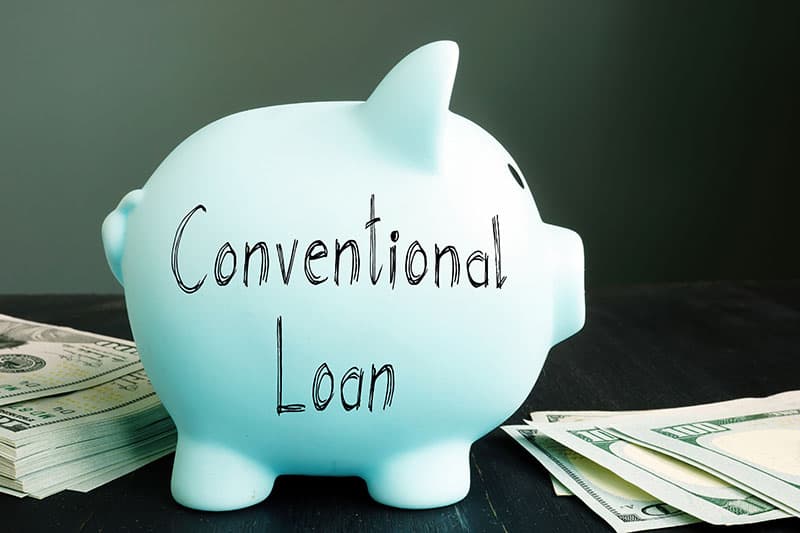
The most common home purchase loans are conventional, FHA, VA, USDA and jumbo loans. Conventional loans fit borrowers with steady income and solid credit, FHA allows lower credit scores, VA and USDA can require no down payment for eligible buyers, and a jumbo loan covers amounts above the conforming limit, which is $832,750 for a one-unit home in most areas for 2026. If you're self-employed, investing, building, renovating or buying before you sell, a specialty loan may fit better.
What are the main types of home loans?
| Loan | Usually fits | Key facts |
|---|---|---|
| Conventional | Borrowers with steady income and solid credit | As low as 3% down with programs like Fannie Mae HomeReady; mortgage insurance usually required with less than 20% down |
| FHA | Buyers who want a low down payment or more flexible credit | 3.5% down with a 580+ credit score; FHA mortgage insurance on every loan; 2026 limit $541,287 for one unit in most counties |
| VA | Eligible veterans, service members and some surviving spouses | No down payment if the price isn't above appraised value; no monthly mortgage insurance; you must live in the home |
| USDA | Buyers in eligible rural and suburban areas | No down payment; household income up to 115% of area median; 30-year fixed only |
| Jumbo | Loans above the conforming limit | The 2026 limit for a one-unit home is $832,750 in most areas, and up to $1,249,125 in high-cost areas |
VA says "nearly 90%" of VA-backed loans are made with no down payment.
Do I have to put 20% down on a conventional loan?
No. Fannie Mae's HomeReady and similar programs allow as little as 3% down. With less than 20% down, a conventional loan usually requires private mortgage insurance, which you can ask to cancel later as you build equity. See what PMI is and how to remove it.
What is the downside of an FHA loan?
Mortgage insurance on every FHA loan, whatever your down payment, and a county loan limit: $541,287 for a one-unit home in most counties in 2026, and up to $1,249,125 in high-cost areas. FHA loans covers the rest.
Is $400,000 considered a jumbo loan?
No. A one-unit loan is jumbo only above your county's conforming limit, which for 2026 is $832,750 everywhere in Florida except Monroe County, and in all of Georgia and Alabama. Jumbo loans has the details.
Which specialty loans fit special situations?
| If you're... | Look at |
|---|---|
| Self-employed, with tax returns that understate your income | Bank statement program, which uses bank deposits instead of the tax returns conventional loans usually require |
| Buying a rental and want to qualify on the property's income | DSCR loan |
| Buying a vacation home or investment property | Investment property loans |
| Building a home | Construction loan |
| Buying a home that needs work | Renovation (rehab) loan, which rolls repair costs into the loan |
| Buying and renovating to resell | Fix and flip loan |
| Buying your next home before selling your current one | Bridge loan |
Can I add down payment assistance to my loan?
Yes, if you qualify. Florida Housing's Hometown Heroes program works with FHA, VA, USDA and conventional first mortgages. As Florida Housing describes it for 2026:
- A second mortgage of 5% of the first mortgage, from $10,000 to $35,000, deferred for 30 years and not forgivable. It's due when you sell, refinance, transfer the home or stop living in it.
- For first-time, income-qualified buyers who work full time in eligible occupations, such as health care, schools, first responders, public safety and courts, and child care; who serve in the military, reserves, Coast Guard or Florida National Guard; or who are veterans working full time for a Florida employer.
- In Leon County, for reservations on or after May 6, 2026, the income limit is $149,250 for FHA, VA and Freddie Mac HFA Advantage loans, and $119,850 for USDA loans.
Florida Housing says applying costs nothing. Its page showed no funding status when we checked on November 17, 2026, so confirm availability before you count on it. We offer Florida Housing programs, including Hometown Heroes, through our wholesale lender partners. In Georgia, the Department of Community Affairs' Georgia Dream program, and in Alabama, the Alabama Housing Finance Authority's Step Up program, also offer down payment help, each with its own income limits. See first-time home buyer options, low down payment options and seller-paid buydowns.
Should I choose a fixed or adjustable rate?
Every core program comes in a fixed-rate version, where the rate never changes. Many also offer adjustable-rate mortgages (ARMs), where the rate is fixed for an initial period and then adjusts on a schedule within set caps. USDA guaranteed loans are 30-year fixed only.
How do I choose the right home loan?
Start with eligibility (VA service, USDA location and income, assistance limits), then compare total cost: down payment, mortgage insurance or fees, and rate. Prices for the same loan differ by lender: among the top 20 lenders, the CFPB found APRs for the same loan type spread 41 to 64 basis points, about $100 a month on a loan of about $300,000. We compare options across 100+ lenders, with no application fee or broker fee.
Rates change every business day, so compare programs on the home you're looking at now. The comparison tool is free to use and needs no credit check: paste a listing link or type an address, and it shows conventional, FHA, VA and USDA payments and cash to close side by side.
Mortgage and home buying guides
Plain-English answers from John McLaughlin (NMLS 2013969) to the questions buyers and homeowners ask most: pre-approval, which loan fits, down payment help, closing costs and life after closing.

Ready to get pre-approved?
Rates move every business day, so get pre-approved now to see what you qualify for today. We respond the same business day.